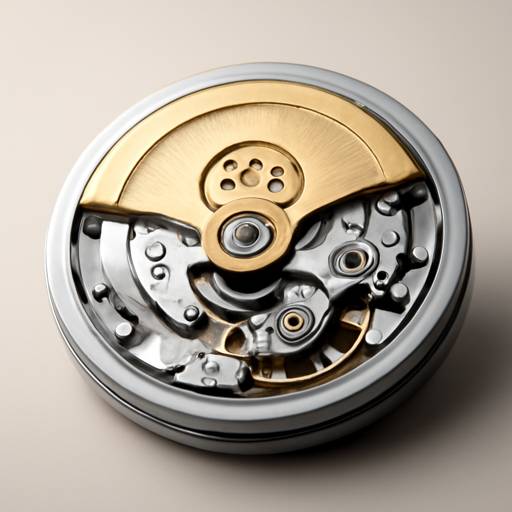
Why ETA Saatler Remain the Gold Standard for Swiss Watch Enthusiasts Worldwide
In the universe of mechanical horology, few names carry the weight and silent authority of ETA SA Manufacture Horlogère Suisse. The term ETA Saatler—Turkish for “ETA watches”—has become shorthand among collectors and first-time buyers alike for timepieces powered by movements that blend Swiss precision, legendary reliability, and effortless serviceability. Far from being just a component supplier, ETA is the invisible heartbeat inside an astonishing range of wristwatches, from entry-level Swiss automatics to high-end chronometers bearing the most coveted marques. Understanding what makes these movements so revered, how they evolved, and why they still dominate the conversation today is essential for anyone serious about watch collecting or simply seeking a lifelong daily wearer.
The Silent Engine Behind Luxury Timepieces – What Makes ETA Movements So Special
To appreciate ETA Saatler fully, one must first grasp what an ETA movement actually represents. ETA is a Swiss movement manufacturer that traces its roots back to 1856 and eventually became the industrial backbone of the Swiss watch industry. By the late 20th century, it was producing millions of mechanical calibers annually, supplying both the Swatch Group’s own brands and countless independent watchmakers. The magic lies in their engineering philosophy: create robust, easily regulated movements that can be produced at scale without sacrificing chronometric performance. A well-maintained ETA caliber like the 2824-2 or the 2892-A2 can comfortably run within COSC chronometer standards even without official certification, thanks to tight manufacturing tolerances and a design refined over decades.
What truly sets ETA apart is the combination of proven architecture and a vast ecosystem of spare parts. Every watchmaker on the planet knows how to service an ETA movement. This means that a watch equipped with an ETA engine is not a disposable object; it is a device built to be maintained, repaired, and handed down. The movements use materials like Glucydur balance wheels and Nivarox hairsprings that resist magnetism and temperature variations, ensuring stable timekeeping in daily life. Whether housed inside a robust dive watch or a slim dress piece, an ETA caliber delivers the same core promise: it will wake up with a flick of the wrist and run predictably day after day. This combination of durability and repairability has turned ETA Saatler into a metaphor for sensible, lasting quality rather than fleeting trends.
Moreover, ETA’s influence extends beyond the movement itself. The company’s standardised plate and bridge layouts allowed smaller brands to focus on dial design, case finishing, and bracelets rather than spending years developing an in-house engine. As a result, an entire generation of iconic watches—from vintage Tudor Submariners to modern Sinn tool watches—earned their stripes on the back of ETA calibers. The very phrase ETA Saatler thus implies a watch that is honest about its mechanical heart, prioritising real-world performance over marketing hype. Even with the rise of proprietary movements in recent years, the demand for ETA-powered pieces has never truly faded because the underlying value proposition remains untouched: a high-quality Swiss movement that can be serviced anywhere, at a reasonable cost, for decades to come.
Decoding ETA Calibers – From the Workhorse 2824 to High-Beat Chronographs
The term ETA Saatler covers a wide spectrum of calibers, each with its own personality and ideal application. The most celebrated is undeniably the ETA 2824-2, a 25-jewel automatic movement beating at 28,800 vibrations per hour (4 Hz). It offers hours, minutes, sweeping seconds, and a date complication with a quick-set function. This caliber became the default choice for countless automatic watches because it is robust, accurate, and surprisingly thin at just 4.6 mm. Its bi-directional winding rotor and Etachron regulator system make it easy for watchmakers to fine-tune timing. Many enthusiasts specifically seek out ETA Saatler equipped with elaboré or top-grade 2824 versions, where higher decoration and tighter tolerances elevate the movement to near-chronometer performance even without COSC paperwork.
For those who value slimness and a slightly more refined architecture, the ETA 2892-A2 is the benchmark. At only 3.6 mm in height, it serves as the foundation for watches that add complex modules on top—such as GMT, power reserve, or even perpetual calendars—without becoming excessively thick. The 2892 family has powered some of the most elegant watch designs in history, and its winding efficiency remains superb. Collectors of vintage Omega and IWC pieces know that a well-maintained 2892 can run circles around many modern in-house designs. When you encounter ETA Saatler featuring the 2892, you are looking at a movement that shares DNA with the Omega caliber 1120, a testament to its engineering pedigree.
Beyond three-hand automatics, ETA’s chronograph movements, particularly the Valjoux 7750, deserve a mention. This cam-operated automatic chronograph is nothing short of a legend. Its unmistakable wobble on the wrist, caused by a heavy oscillating weight winding in a single direction, is beloved by enthusiasts. The 7750 brings stopwatch functionality to sports watches with a ruggedness that few can match. Many ETA Saatler with this movement feature the classic 6-9-12 sub-dial layout and day-date displays. Because the 7750 can be massaged into different grades and customised with module-based complications, it became the go-to engine for automotive-inspired chronographs, pilot watches, and even some haute horlogerie pieces. While ETA now restricts supply of complete movements to non-group brands, the used and vintage market for 7750-powered watches remains incredibly vibrant, proving that a great design endures regardless of corporate strategy.
Hand-wound purists are not left out either. The ETA 6497 and 6498, originally designed for pocket watches, found new life in large pilot and Panerai-style wristwatches. Their 16.5-ligne diameter provides a captivating view through a display caseback, showcasing large bridges and a slow-beat 18,000 vibrations per hour rate that makes the seconds hand appear to glide with deliberate grace. For many watch lovers, the sheer mechanical charm of a hand-wound ETA caliber is the gateway into the hobby. Understanding these families helps demystify ETA Saatler; it’s not about one single movement but an entire ecosystem of calibers that can be chosen based on thickness, complication, power reserve, and the feel you want on your wrist.
How to Identify Authentic ETA Movements and Avoid Clones – A Buyer’s Guide
The popularity of ETA Saatler has inevitably spawned a shadow industry of counterfeit and clone movements that attempt to mimic ETA designs. For the uninformed buyer, distinguishing a genuine Swiss-made ETA from a Seagull clone or an Asian copy can be challenging, yet it is crucial for preserving value, performance, and serviceability. The first telltale sign is the finishing quality on the movement plates and bridges. Genuine ETA calibers, even in their basic grades, feature clean perlage, Geneva stripes where applicable, and precisely bevelled edges. Under a loupe, the engravings—the ETA logo, caliber number, and “Swiss” or “Swiss Made” markings—are sharp and evenly stamped or laser-etched. Clones often have fuzzy, poorly aligned markings and rough machine marks on the bridges.
Another reliable indicator is the shock protection system. Many ETA movements use the Incabloc spring, instantly recognisable by its lyre-shaped golden spring holding the jewel in place. Clones frequently substitute a triangular-shaped Novodiac-style spring or a cheaper equivalent. The balance wheel itself is a giveaway: genuine ETA movements typically employ a Glucydur balance with a specific number of adjustment screws or, in more modern variants, a smooth balance wheel regulated by eccentric weights. The hairspring material—Nivarox—has a distinct silvery-white sheen and is produced with proprietary techniques that clones cannot fully replicate. Furthermore, the rotor bearing on automatics like the 2824 and 2892 uses a ball-bearing system so smooth that it rotates with near-silent efficiency, while clone rotors often sound gritty or spin in an unbalanced manner.
Serial numbers and jewel counts provide additional verification. A genuine ETA 2824-2, for instance, always has 25 jewels; clones may claim 25 but sometimes contain fewer functional jewels hidden under a decorative plate. The clicking sound of the winding mechanism and the crispness of the date change at midnight are nuances that experienced collectors learn to recognise. For those entering the market for ETA Saatler, purchasing from a trusted source is the simplest way to avoid counterfeits. A reputable seller will verify authenticity with a testing machine, checking the movement’s beat rate, amplitude, and positional accuracy before delivery. Without that assurance, a seemingly good deal on an “ETA-powered” watch might actually land you a heavily disguised Asian movement that will become unserviceable after a few years—exactly the opposite of what genuine ETA ownership stands for.
It is also wise to consider the watch’s overall specifications. Authentic ETA-powered pieces from quality manufacturers will almost always pair the movement with a sapphire crystal and a solid case made of 316L or 904L stainless steel. These holistic quality markers signal that the brand had enough confidence in the movement to invest in the rest of the construction. For buyers specifically seeking ETA Saatler from renowned factories, verifying the combination of Swiss movement certification, case material, and glass quality ensures that every component is in harmony. In a world where unworn vintage stock and factory-fresh replicas blur lines, the ability to authenticate an ETA movement is not just academic; it’s the key to getting what you paid for. After all, the whole attraction of an ETA caliber lies in its long-term reliability—a promise that a counterfeit movement simply cannot keep.
Finally, documentation matters. Original factory stickers, movement test reports, and a clear warranty that covers the movement itself offer peace of mind. While ETA no longer openly sells movements to non-Swatch Group brands, the existing stock and certified refurbished units continue to flow to specialised dealers. That reality makes grading even more important. An ETA 2824 Top grade with decorative finishing and a higher accuracy standard is a different beast from a basic standard grade found in an older budget watch. Understanding these grades and being able to spot them through the caseback—or with the help of a trusted expert—transforms the buying process from a gamble into a confident acquisition. When the movement is verified and properly lubricated, an ETA Saatler piece will silently reward you with years of unwavering service, embodying the very essence of Swiss mechanical excellence without needing to shout its pedigree.

Prague astrophysicist running an observatory in Namibia. Petra covers dark-sky tourism, Czech glassmaking, and no-code database tools. She brews kombucha with meteorite dust (purely experimental) and photographs zodiacal light for cloud storage wallpapers.