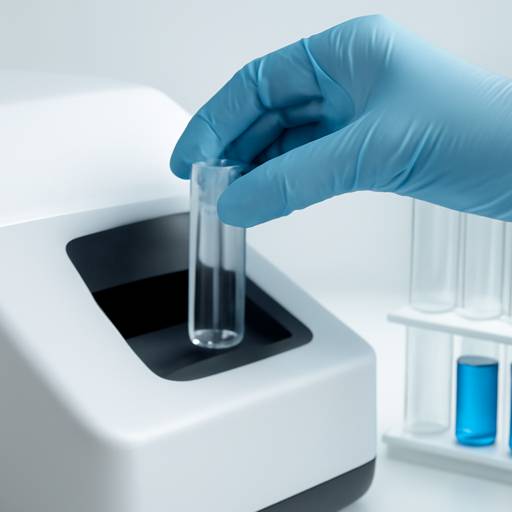
Mastering Cuvette Spectrophotometry: The Backbone of Reliable UV/Vis Analysis
The Fundamental Science Behind the Cuvette Spectrophotometer
A cuvette spectrophotometer measures how much light a liquid sample absorbs at specific wavelengths, turning raw optical data into quantitative chemical information. The foundation of every measurement is the Beer-Lambert law, which states that absorbance is directly proportional to the concentration of the absorbing species and the pathlength the light travels through the sample. In a cuvette-based system, that pathlength is precisely defined by the internal width of the cuvette—most commonly 10 mm. This rigid geometric control is what gives cuvette spectrophotometry its reputation for exceptional accuracy and reproducibility across decades of analytical work.
At the heart of the instrument lies a carefully orchestrated optical train. A light source—often a combination of a deuterium lamp for the ultraviolet range and a tungsten-halogen lamp for visible light—generates a continuous spectrum from roughly 190 to 1100 nm. The light passes through a monochromator, which isolates a narrow band of wavelengths, before being split into two beams in double-beam designs. One beam traverses the sample cuvette, while the other travels through a reference cuvette containing pure solvent or a blank solution. The ratio of transmitted intensities is measured by a sensitive detector, typically a photodiode array or a CCD sensor, and converted into absorbance values. Single-beam instruments, though simpler, take a sequential approach by measuring the blank first and the sample afterward—modern software makes this process nearly seamless.
Why does the cuvette spectrophotometer remain a laboratory staple even as micro-volume and nano-volume technologies evolve? The answer lies in flexibility and compliance. Many regulated methods in pharmacopoeias, environmental standards, and food safety protocols explicitly specify a 10 mm cuvette pathlength. Cuvettes also accommodate a vast range of sample types: turbid bacterial cultures, viscous enzyme solutions, volatile organic solvents, and optically clear aqueous buffers. With the right cuvette material and pathlength, you can analyze samples from high-concentration industrial dyes to trace-level pollutants. In addition, the physical cuvette format allows for easy temperature control via water-jacketed holders, stirring, and continuous flow setups—features that are essential for kinetic analysis and reaction monitoring.
Today’s most advanced spectrophotometers blur the line between cuvette and micro-volume work. Engineers have designed platforms that let users switch from a standard 10 mm cuvette to a micro-volume accessory capable of measuring sample volumes as low as 0.5 µL. This dual-mode capability preserves the regulatory acceptance of the cuvette format while granting the sample-saving advantages of direct-drop technologies. As a result, the modern cuvette spectrophotometer is no longer a single-purpose instrument; it is a versatile hub that adapts to everything from nanoliter-scale precious samples to milliliter-scale quality control batches.
From Benchtop to Breakthrough: Real-World Applications Across Industries
The true power of a cuvette spectrophotometer lies in its ability to translate light absorption into actionable insights across an extraordinary array of disciplines. In molecular biology and biochemistry, nucleic acid quantification remains one of the most frequent uses. Laboratories rely on absorbance readings at 260 nm to determine DNA and RNA concentrations, with the ratios at 260/280 nm and 260/230 nm serving as critical purity indicators. A high-quality cuvette spectrophotometer ensures that these ratios are measured with minimal stray light and excellent wavelength accuracy, reducing the risk of downstream failures in PCR, sequencing, and cloning workflows.
In protein science, direct UV absorbance at 280 nm—dominated by tryptophan and tyrosine residues—provides a fast, dye-free concentration readout. Where higher sensitivity is required, colorimetric assays such as the Bradford, BCA, and Lowry methods generate chromophores that strongly absorb in the visible region, typically between 540 and 750 nm. Cuvette-based measurements give researchers the flexibility to analyze both the unreacted protein solution and the coloured complex in the same instrument, often using disposable plastic cuvettes for convenience or quartz cuvettes for far-UV investigations.
Kinetic assays represent another domain where the cuvette format shines. Enzymatic reactions that generate or consume a chromophore—such as the oxidation of NADH to NAD⁺ monitored at 340 nm—demand precise temperature control and continuous data logging. A temperature-controlled cuvette holder linked to a circulating water bath, combined with software that records absorbance changes over time, allows enzymatic rates to be calculated with confidence. Clinical chemistry analyzers, too, routinely employ cuvette-based optical systems for end-point and kinetic tests covering liver enzymes, glucose, cholesterol, and dozens of other biomarkers.
Beyond biology, cuvette spectrophotometers play an essential role in environmental and industrial testing. Water quality laboratories measure nitrate, phosphate, ammonia, and heavy metals using reagent kits that develop specific colors under standardized conditions. In the food and beverage sector, colour intensity measurements of beer, wine, oils, and juices are performed in the visible region, while UV scans detect adulterants and ensure batch consistency. The pharmaceutical industry relies on cuvette spectrophotometry for assay and identification tests prescribed by major pharmacopoeias, dissolution testing, and stability studies. For laboratories that must reconcile legacy cuvette methods with the need to process small-volume research samples, versatile instruments that bridge both worlds are invaluable. For example, a state-of-the-art cuvette Spectrophotometer platform with dual-mode capability can handle everything from milliliter-scale quality control runs to precious microliter-sized nucleic acid extracts without sacrificing accuracy or throughput.
Frequently, environmental and forensic labs use cuvettes to quantify trace-level compounds after extraction and derivatization. The technique is robust enough to be deployed in field-portable units for on-site screening of water contaminants and yet refined enough to support advanced research in photochemistry and materials science, where the spectral response of thin films in optical cuvettes reveals band gaps and reaction dynamics. In every scenario, the cuvette serves as a controlled optical cell that ensures reproducibility across different operators, instruments, and laboratories—a silent but critical contributor to global analytical consistency.
Maximizing Performance: Choosing and Caring for Your Cuvettes
Even the most sophisticated cuvette spectrophotometer cannot compensate for poor cuvette selection or improper handling. The first crucial decision is material. Quartz cuvettes (often fused silica or synthetic quartz) are mandatory for UV work below roughly 340 nm because glass and most plastics absorb strongly in that region. For visible-only measurements, optical glass cuvettes are a cost-effective alternative, and disposable plastic cuvettes made of polystyrene or polymethyl methacrylate (PMMA) offer excellent clarity in the visible range while eliminating cross-contamination risks. However, plastic cuvettes are generally not suitable for organic solvents and can develop scratches that scatter light, so their use should be evaluated against the required precision.
Pathlength is another variable that can dramatically affect sensitivity and dynamic range. While 10 mm is the conventional standard, cuvettes with shorter pathlengths (2 mm, 5 mm) allow higher concentration samples to be measured without dilution, and longer pathlengths (20 mm, 50 mm, or even 100 mm) push detection limits lower for trace analysis. In dual-beam instruments, matched pairs of cuvettes—with optical windows that have nearly identical transmission characteristics—are essential to minimize baseline offsets. Many manufacturers provide certified matched sets, and some advanced instruments offer software-based pathlength correction to account for minor deviations.
Proper cleaning and maintenance of cuvettes are non-negotiable for reproducible data. After each use, cuvettes should be rinsed with a solvent that dissolves the sample matrix, followed by a series of distilled water rinses and, when necessary, mild detergents or dilute acids. The optical windows must never be touched with bare fingers, as skin oils leave residues that absorb UV light and introduce errors. Cuvettes should be stored dry in a dust-free environment, and slightly acidic storage conditions are recommended for quartz cells used with protein solutions to prevent build-up of adsorbed films. Even micro-scratches on the measuring windows can increase stray light and compromise the linearity of the absorbance response, so inspection under a light source should be part of routine quality checks.
Calibration and blanking procedures directly influence measurement confidence. A high-quality cuvette spectrophotometer will allow the user to measure the same blank solution in both sample and reference positions, confirming that the system reads near zero absorbance across the wavelength range of interest. Regular wavelength accuracy checks using holmium oxide or didymium glass filters, along with photometric accuracy verification using standards such as potassium dichromate, keep the instrument within specification. When coupled with automated cuvette changers, temperature ramping, and micro-volume sample stages, today’s spectrophotometers give scientists a toolkit that adapts to evolving research needs while maintaining the rigor demanded by ISO and GLP-accredited environments.

Prague astrophysicist running an observatory in Namibia. Petra covers dark-sky tourism, Czech glassmaking, and no-code database tools. She brews kombucha with meteorite dust (purely experimental) and photographs zodiacal light for cloud storage wallpapers.