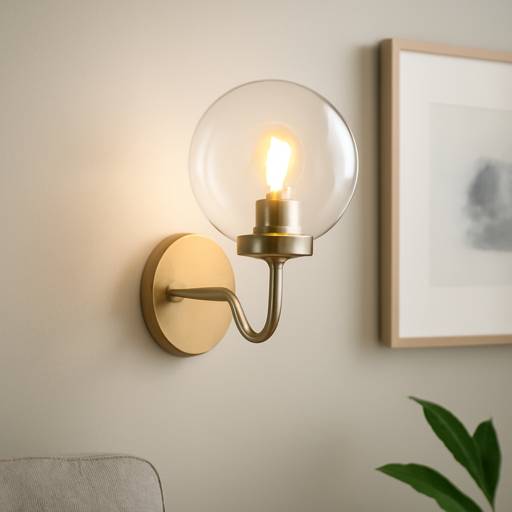
Bring Character to Every Room with a Thoughtfully Chosen Sconce
What a Sconce Is—and Why It Belongs in Every Lighting Plan
A sconce is a wall-mounted light that offers a rare mix of beauty and utility. Unlike ceiling fixtures that flood a room from above, a sconce pulls light down to eye level, shaping the atmosphere with gentle shadows and focused highlights. In well-layered lighting plans, wall sconces provide ambient fill, accent drama, or task-ready illumination while saving precious floor and surface space. They can be sleek and modern, warm and farmhouse-inspired, or ruggedly industrial—yet the best examples transcend decor trends because they are built from durable materials and finished with care.
Consider what makes a quality wall fixture stand out: solid metal shades that resist dings, clean powder-coated finishes that shrug off scuffs, and UL-listed components that deliver dependable performance indoors and out. A well-made sconce can outlast fast-moving design cycles because it is engineered for the long term. Hand-spun steel, precise welds, and modern wiring pair old-fashioned craft with everyday reliability. When you choose one strong, timeless piece, you reduce replacement cycles and waste—an underappreciated sustainability win.
Functionally, sconces split into a few helpful categories. Hardwired sconces connect cleanly to a junction box for a permanent, cord-free look—ideal for bathrooms, hallways, and exterior doors. Plug-in versions are renter-friendly and easy to move; a cord may become a design element when paired with a neat cord cover. Shade orientation matters, too: downlights concentrate illumination where you need it (great for signage, pathways, and reading), while uplights bounce a softer glow across ceilings and walls. Gooseneck arms create dramatic projection and throw light outward; straight arms keep profiles tight and streamlined.
Bulb and control choices finish the story. Pair a sconce with a dimmer to dial from lively brightness to intimate warmth. Most designs accept a medium-base LED, and many people prefer filament-style LEDs that evoke vintage charm without heat or energy loss. Choose 2700K–3000K for cozy residential warmth and target CRI 90+ for faithful color rendering, especially in bathrooms and work areas. Outdoors, check ratings: wet-rated fixtures stand up to rain, while damp-rated versions suit covered porches. For coastal addresses, look for powder-coated or galvanized finishes known to resist corrosion. Taken together, these details transform a simple wall light into a resilient, everyday companion.
Design and Placement: Getting Height, Spacing, and Scale Right
Great design happens when proportion, placement, and purpose align. Start with height. For many corridors and living spaces, the center of a wall sconce lands comfortably between 60 and 66 inches from the floor, depending on ceiling height and eye level. In bedrooms, a reading sconce typically sits with the switch or lower rim a few inches above shoulder height when seated—aim for about 48 to 54 inches to the switch or 60–64 inches to the center, fine-tuned to your bed height. In bathrooms, flanking a mirror with sconces at roughly face height (about 60–66 inches to the center) minimizes shadows; position them 28–36 inches apart to cradle the mirror evenly.
Projection and code also matter. Hallways and tight corridors benefit from low-profile fixtures; if a light projects more than 4 inches from the wall and is mounted below 80 inches, ADA guidance may apply in commercial or multi-family settings. In homes, keep pathways clear by selecting compact shades or straight arms. Scale the shade to the architecture: a compact 8–12 inch shade suits apartment entries and small powder rooms, while larger 14–16 inch barn-style shades carry proportion on tall exteriors or wide porches. As a loose rule, an outdoor sconce by the front door feels balanced when the fixture height is roughly one-quarter the door height, centered 66–72 inches off grade—adjust for transoms or tall stoops.
Spacing shapes rhythm. In a long hallway, start with 6–8 feet between fixtures; closer spacing produces a brighter wash, while wider spacing leans moody and dramatic. On exteriors like garages, mount one sconce between double doors or one on each side of a single door for balanced light. If you’re lighting signage or a house number, a down-facing gooseneck concentrates light exactly where it’s needed, reducing glare and encouraging dark-sky neighborliness. Indoors, pair sconces strategically with overhead lighting: recessed or flush mounts for general illumination, a modern sconce for layering and dimension, and a task lamp where pinpoint focus is essential.
Finally, think in finishes and bulbs. Matte black offers bold contrast on light siding and tile; white or cream blends seamlessly for minimalist spaces; galvanized or hand-rubbed tones bring industrial warmth. A warm 2700K filament LED softens metal shades; 3000K feels crisp in kitchens and entries. Choose 90+ CRI when color accuracy matters—art walls, vanities, and laundry stations—and make dimming the default. With these thoughtful tweaks, the simple act of hanging a sconce becomes a precise tool for sculpting light, mood, and movement.
Real-World Scenarios: From Cozy Bedrooms to Resilient Outdoor Barns
Each setting asks something different of a wall light, and the most satisfying results come from matching story to solution. Picture a compact Craftsman hallway with handsome millwork that felt flat at night. Replacing a single overhead dome with three powder-coated steel sconces transformed the passage into a gallery. Mounted at 64 inches to center and spaced seven feet apart, the fixtures cast warm 2700K light along the wainscoting, highlighting texture without glare. A dimmer lets the family swing from bright school-morning energy to an inviting evening glow. Because the shades are steel with a baked-on finish, the fixtures shrug off bumps from backpacks and remain easy to wipe clean—an everyday advantage of durable materials.
Now imagine a coastal cafe terrace where salt air once chewed through bargain fixtures. Switching to wet-rated, powder-coated gooseneck lights solved two problems at once: the broad shades direct light downward onto tabletops for comfort, and the robust finish resists corrosion. Staff reported fewer bugs circling the beams because the light is aimed, not blasted outward. The owner chose a soft black finish for modern character against cedar cladding, and timer-controlled dimming sets lively evening scenes without harsh brightness. The fixtures became part of the identity—proof that a simple industrial sconce can balance brand presence with performance.
Consider a renter’s bedroom where floor space is scarce. A pair of plug-in swing-arm sconces frees up nightstands, placing reading light exactly where it’s needed. Mounted at about 60 inches to center with cord covers painted to match the wall, the setup feels intentional, not temporary. The homeowner selected 2700K LED filament bulbs for cozy tone and installed line-voltage dimmers on the cords. Because the arms swivel, one light serves as both task and ambient source—pulled close for a book, angled up for a gentle wash on the wall.
Finally, a working barn and workshop pose rugged requirements: long life, dependable output, and weather resistance. Large gooseneck outdoor sconces with 14- to 16-inch shades deliver broad, usable pools of light over doors and loading areas. Wet-rating ensures safety in driving rain; sealed sockets and tight powder-coat fend off dust and moisture. Adding dusk-to-dawn sensors eliminates switch hunting after dark and cuts energy use. The result is practical and handsome: a line of downlights that frame doors, improve safety, and underscore the building’s sturdy character. Maintenance is straightforward—wipe with mild soap and water, check fasteners seasonally, and refresh with touch-up paint if life on the farm leaves a mark. When fixtures are built from thick steel and finished with care, they become quiet tools that work hard for years, not seasons.
Across homes, hospitality, and hardworking exteriors, the thread is the same. A thoughtfully specified bathroom sconce that flatters faces, a tight-profile hallway light that respects clearances, a rental-friendly plug-in that adds style without holes, or a wet-rated barn light that laughs at storms—each proves that form and function can share the wall. Choose strong materials, right-size the shade, place it with intention, and finish with dimmers and the proper bulb. Do that, and your sconce will feel less like a fixture and more like a signature—quietly faithful, night after night.

Prague astrophysicist running an observatory in Namibia. Petra covers dark-sky tourism, Czech glassmaking, and no-code database tools. She brews kombucha with meteorite dust (purely experimental) and photographs zodiacal light for cloud storage wallpapers.